Outside the walls
04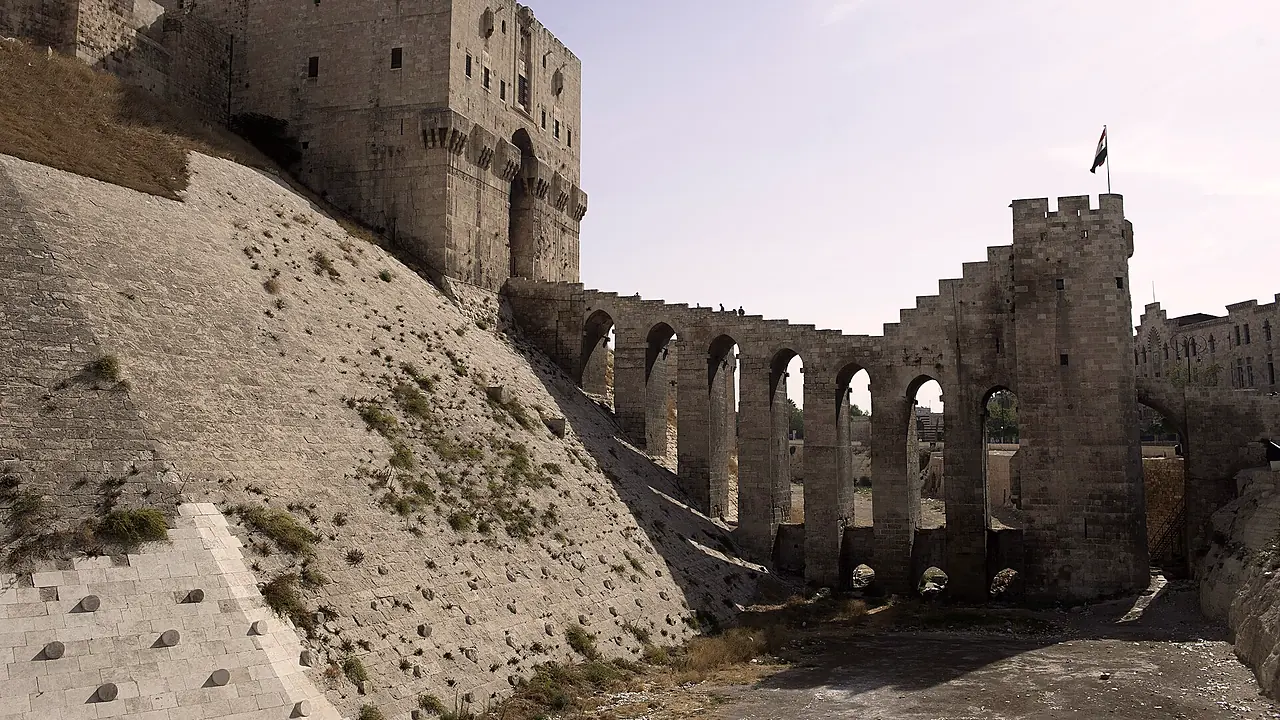
Ayyubid
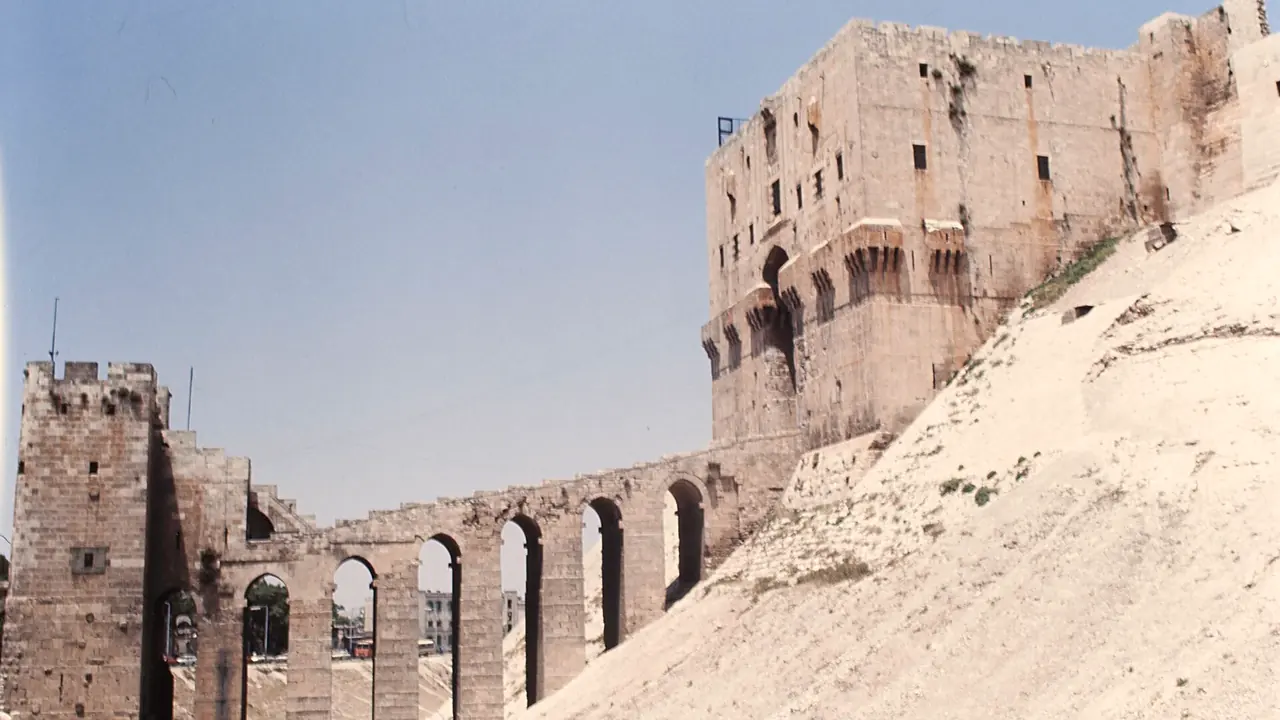
The Moat
Twenty-two metres deep and thirty wide, cut into the rock around the whole mound and fed by water channels.
Ayyubid
The Glacis
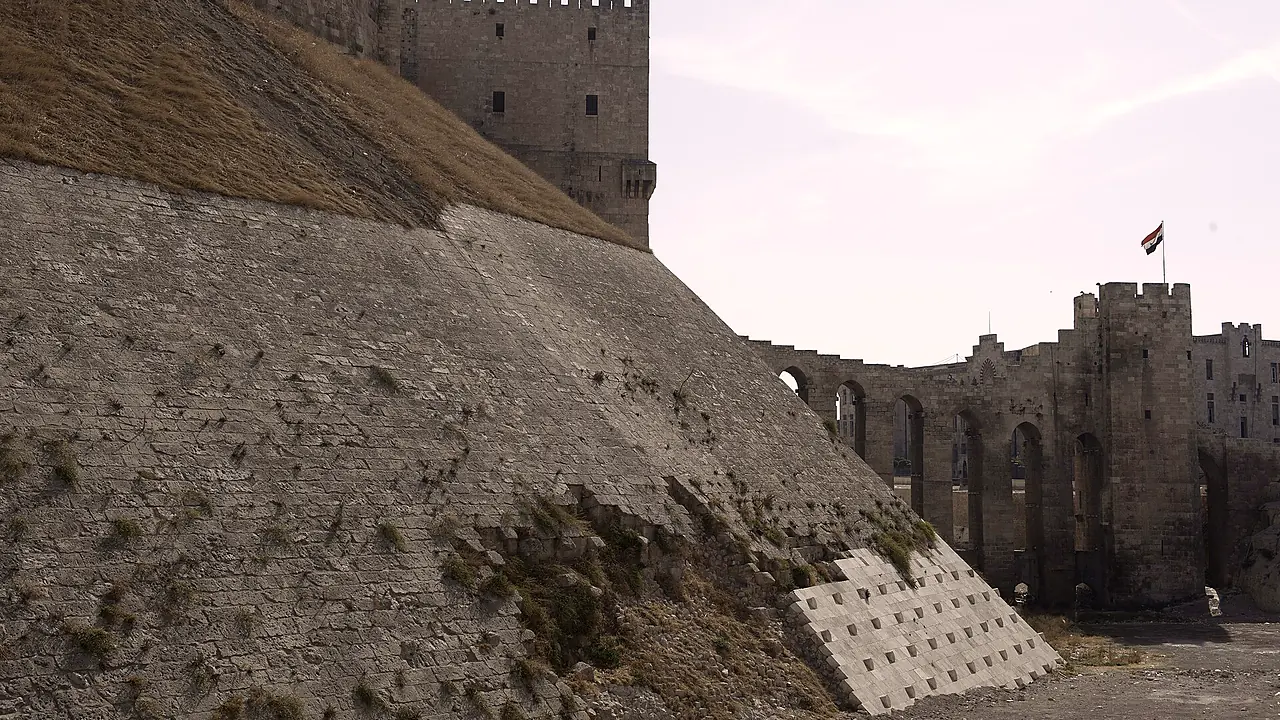
Polished limestone laid straight over the mound's natural slope, so that nothing could be climbed and nothing undermined.
Mamluk
The Southern Advance Tower
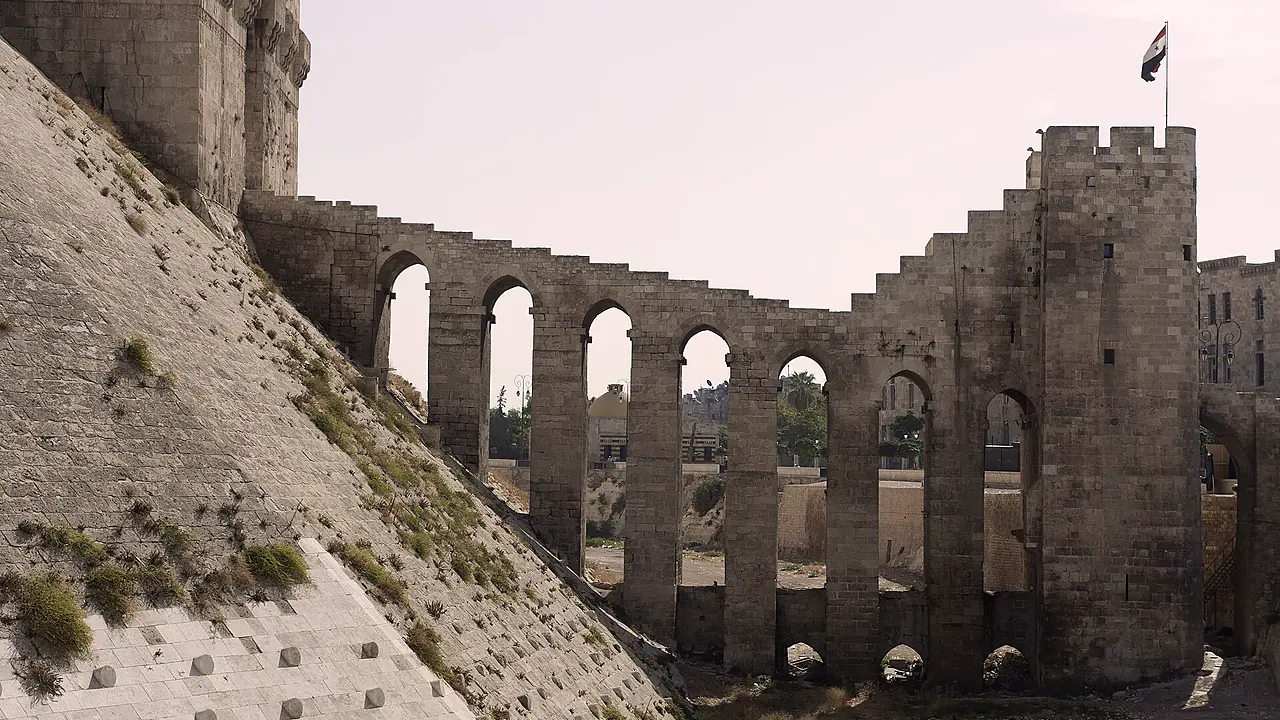
A forward post standing alone in the moat, guarding the approach to the bridge.
Mamluk
The Northern Advance Tower
Its twin on the northern slope, covering the other half of the perimeter.
The approach
04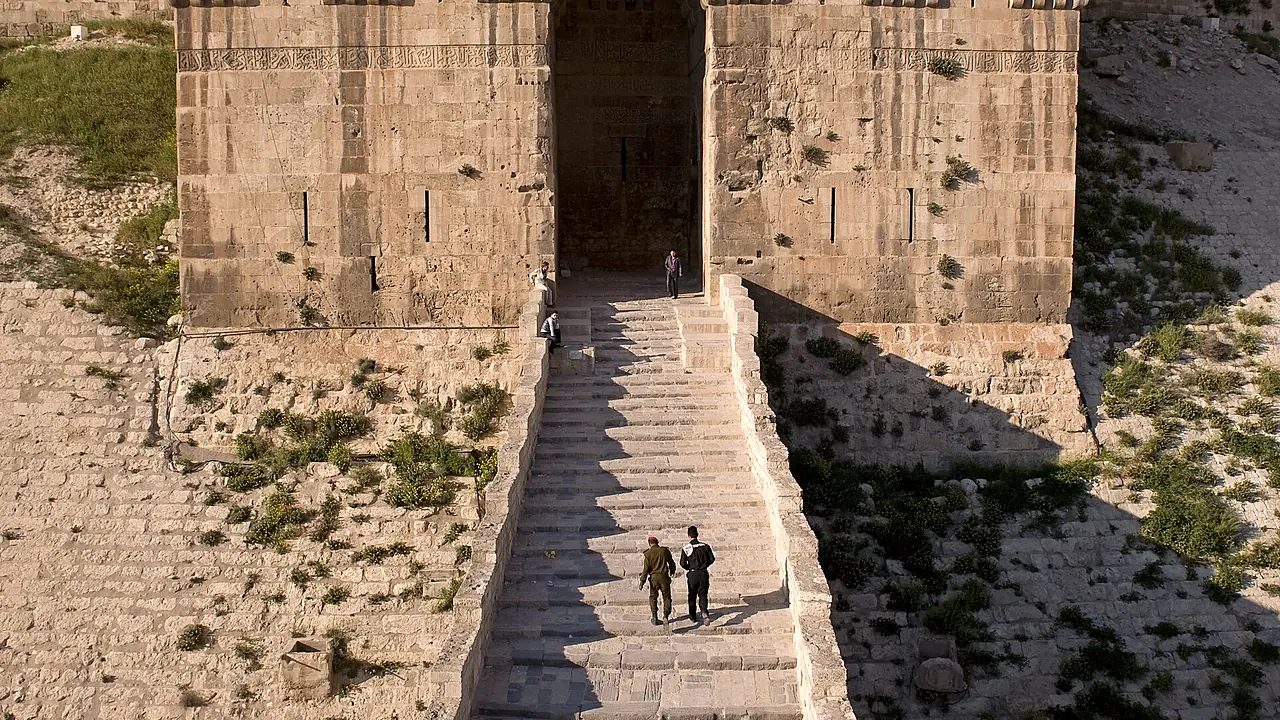
Ayyubid, with later Mamluk rebuilding
The Bridge
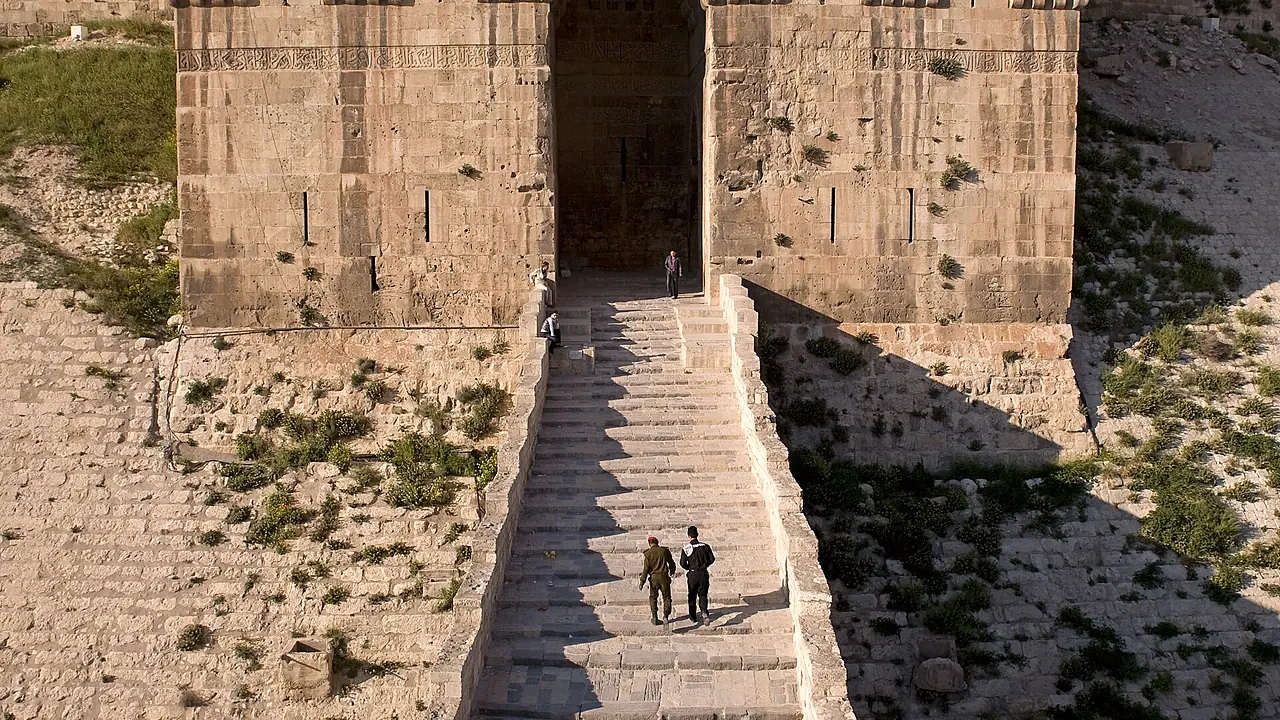
A viaduct on arches crossing the moat and climbing to the gate — the most dramatic approach of any fortress in the region.
Ayyubid / Mamluk
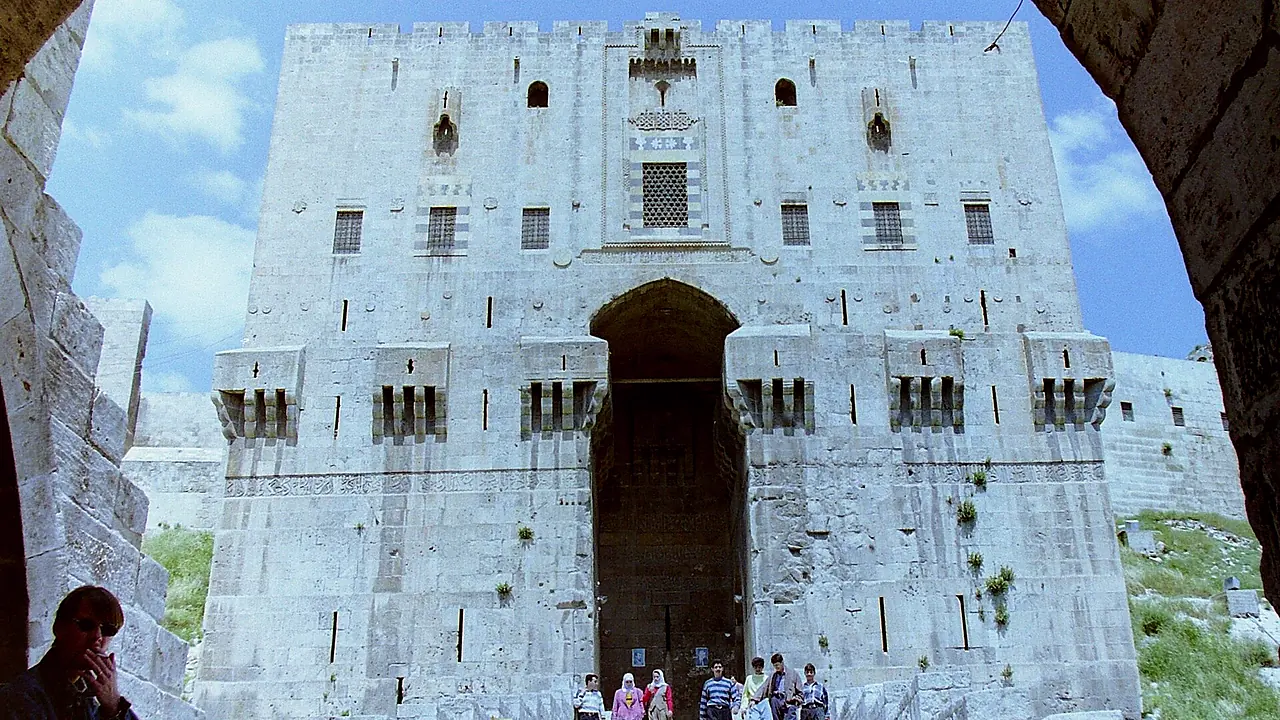
The Outer Gate
The checkpoint at the foot of the bridge, where entry was controlled before anyone set foot on it.
Ayyubid
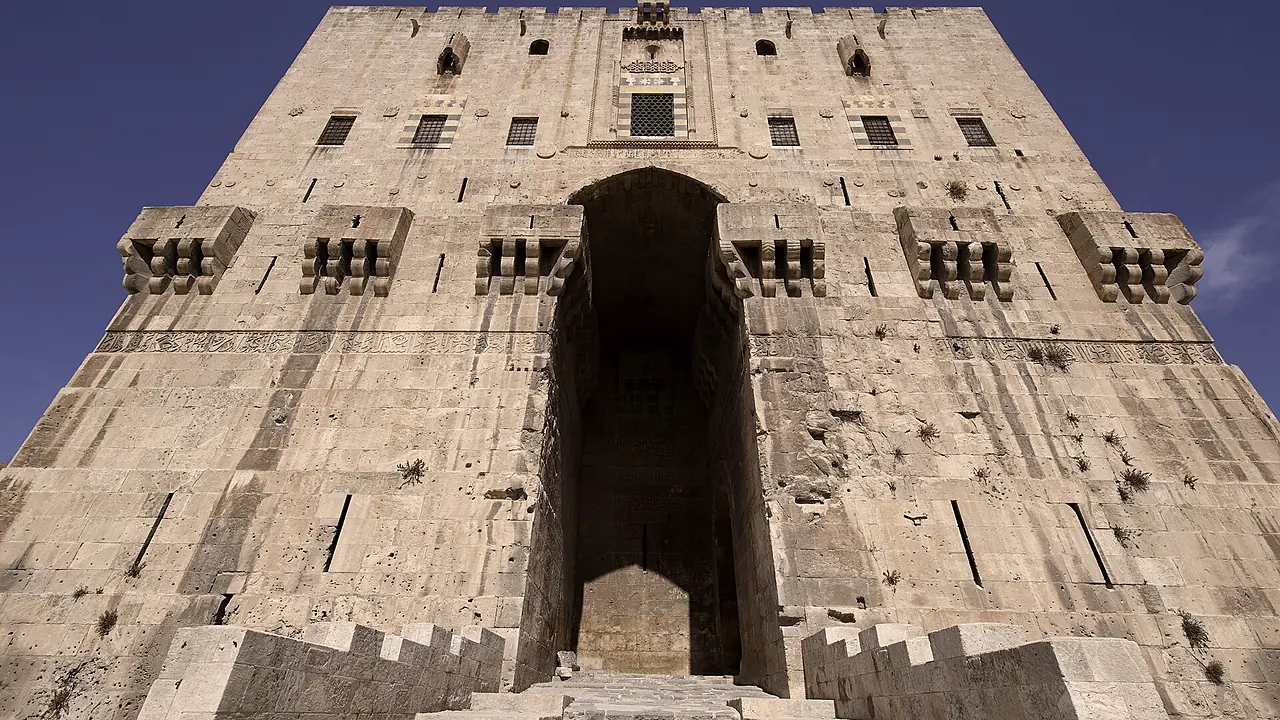
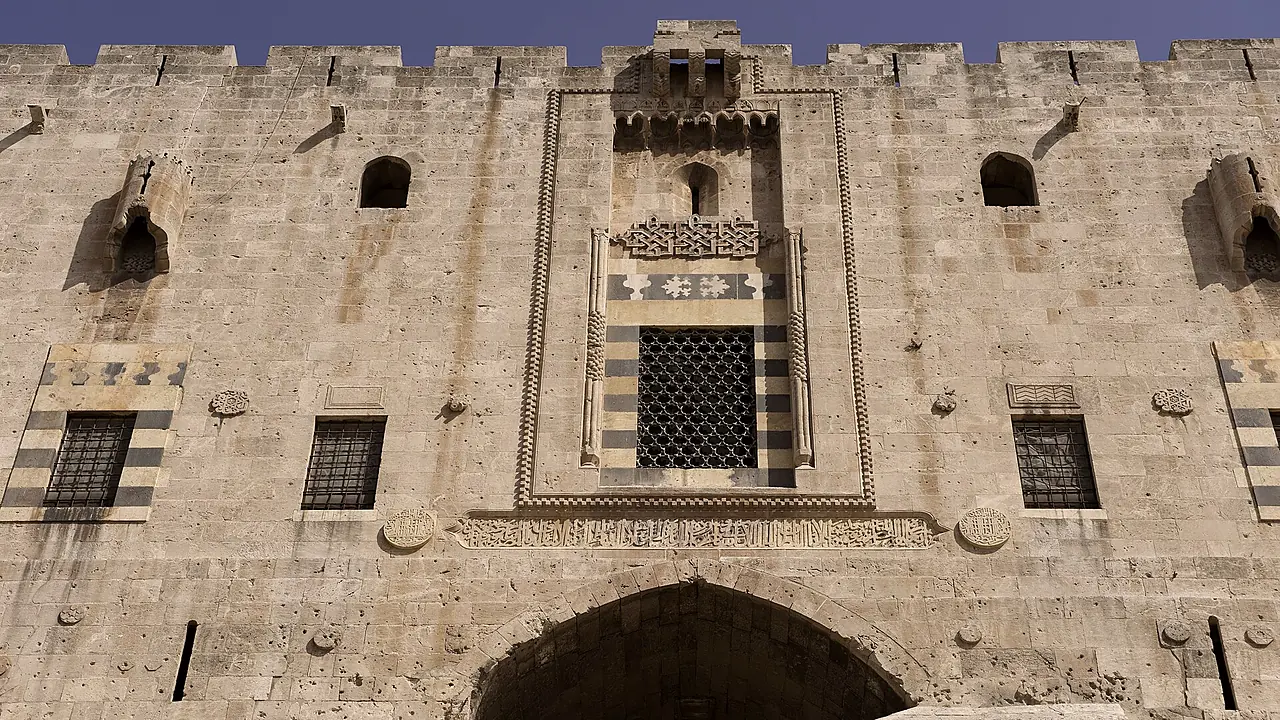
The Bashoura — the Fortified Entrance
A vaulted ramp that turns five or six times under openings built for pouring fire. The most sophisticated fortress entrance of the medieval world.
Ayyubid
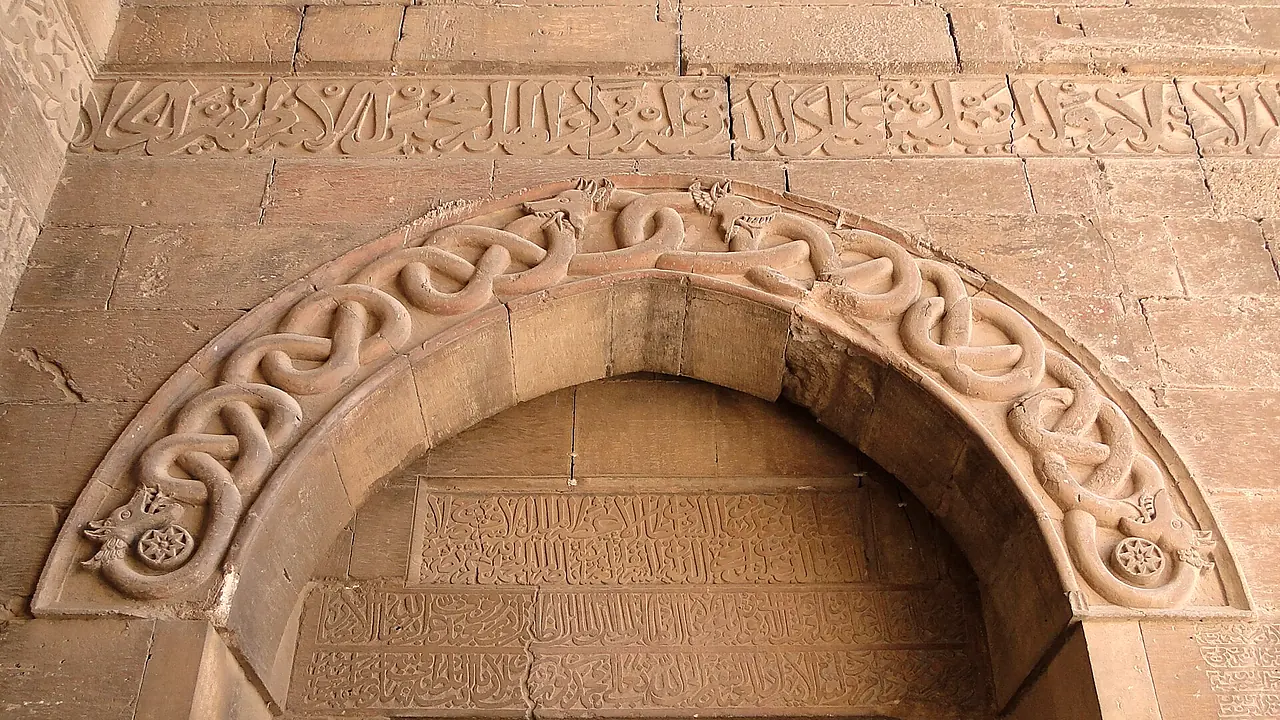
The Lion and Serpent Gates
Reliefs carved into the turns of the ramp: lions for royal power, dragons biting their own tails to mark the edge of protected ground.
Inside the walls
13c. 2400 BC – c. 900 BC
The Temple of the Storm God
The oldest thing on the mound, and the reason the mound exists. In use for fifteen centuries, lost for three thousand years, found in 1996.
Byzantine church → Ayyubid mosque
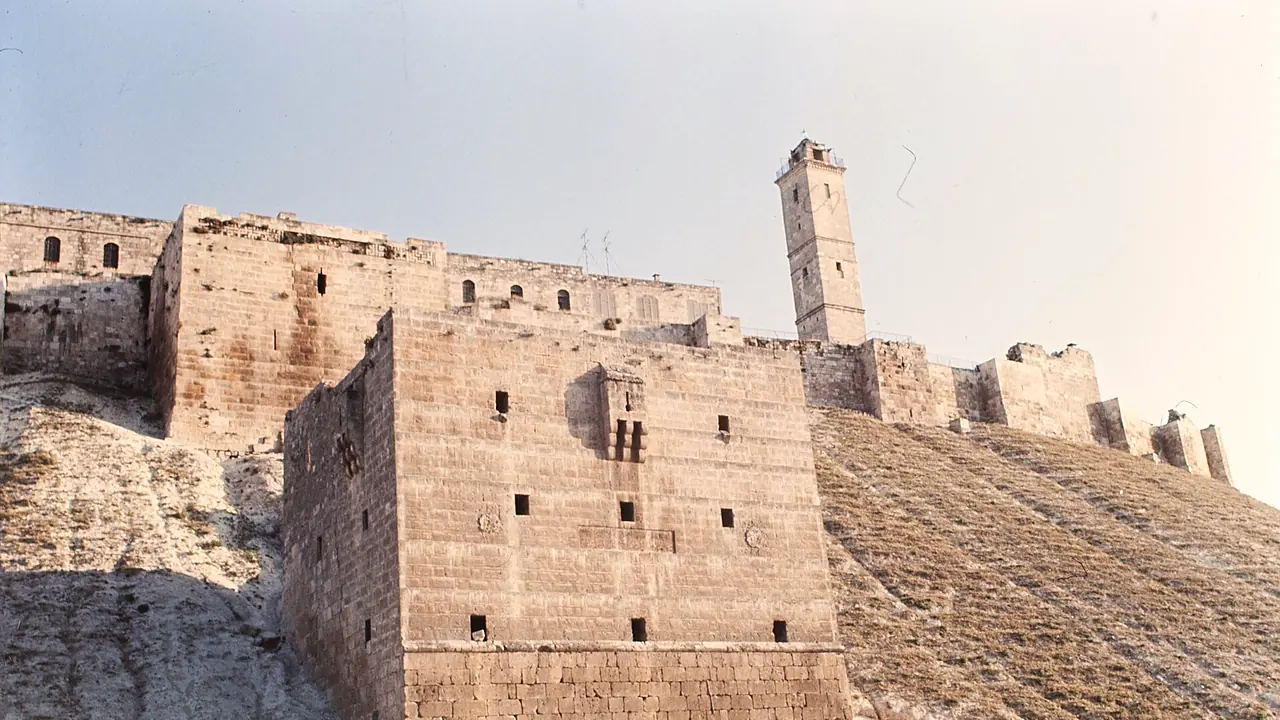
The Great Mosque of the Citadel
The mosque of the court and the garrison. Its minaret is the mound's landmark, visible from across the Old City.
Byzantine church → mosque
Maqam Ibrahim
The small mosque, marking the place where tradition holds that Abraham milked his sheep.
Shrine
Maqam al-Khidr
The shrine of al-Khidr, the green one — a figure Muslims and Christians both keep, and a place people still come to visit.
al-Zahir Ghazi
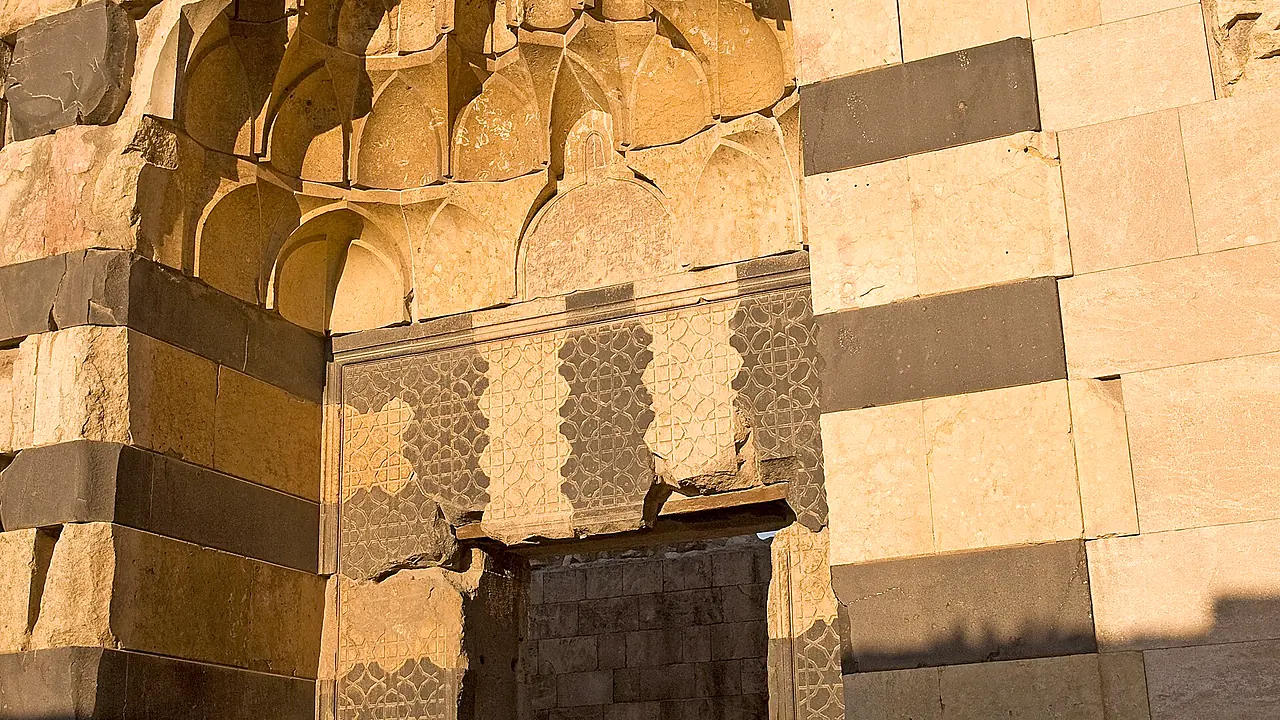
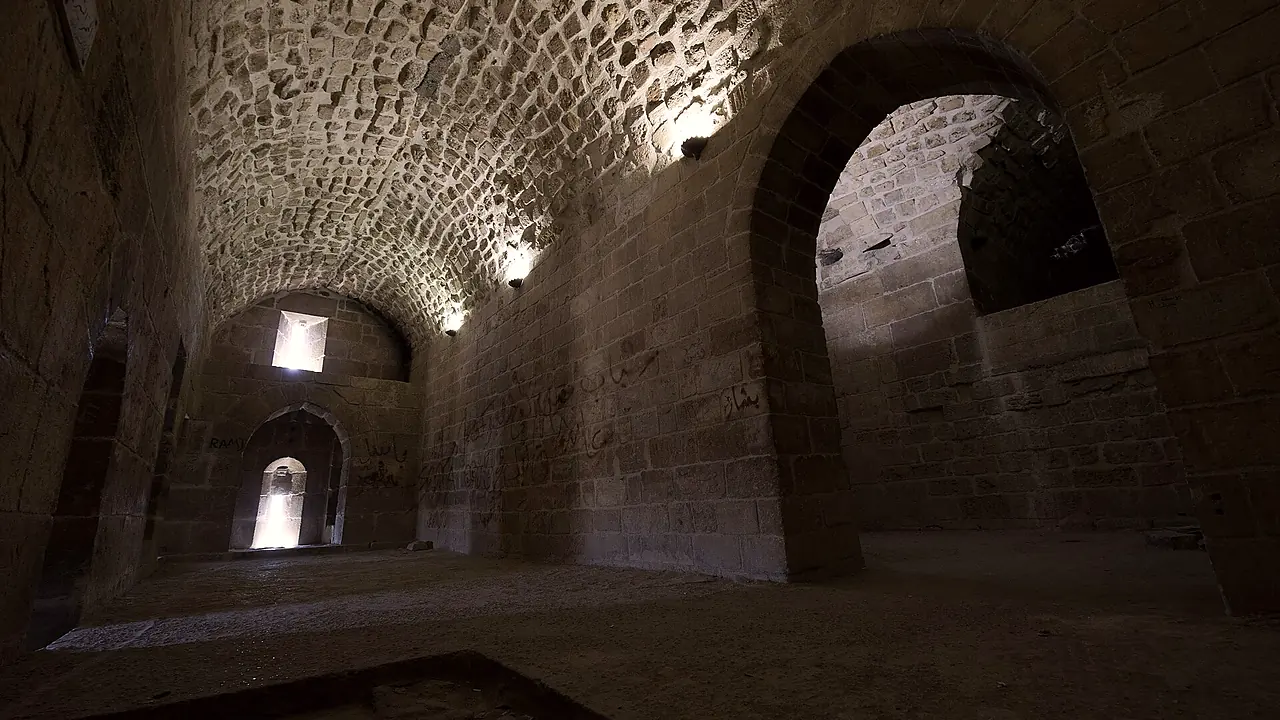
The Ayyubid Palace
Dar al-'Izz, the Palace of Glory: a four-iwan courtyard with a muqarnas portal, burned once and destroyed once.
Ayyubid
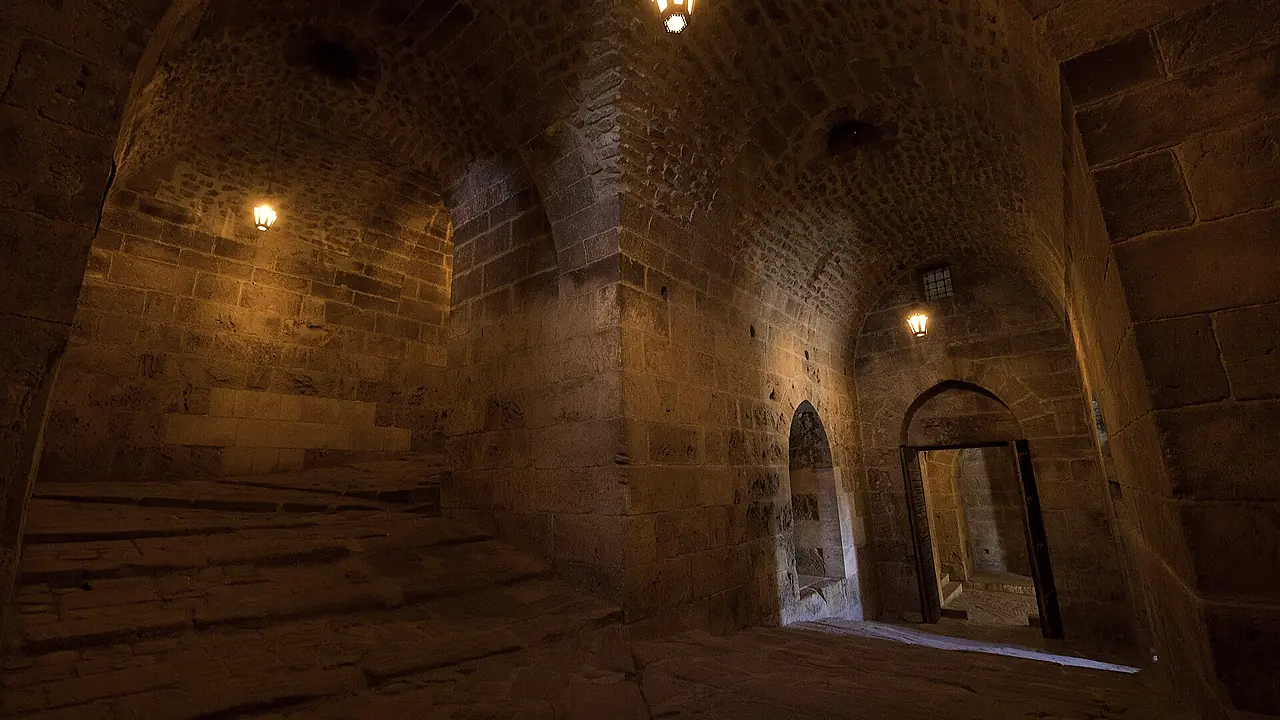
The Royal Bath
The palace hammam — dressing, warm, hot and steam rooms, fed by earthenware pipes carrying hot and cold water.
Ayyubid / Mamluk
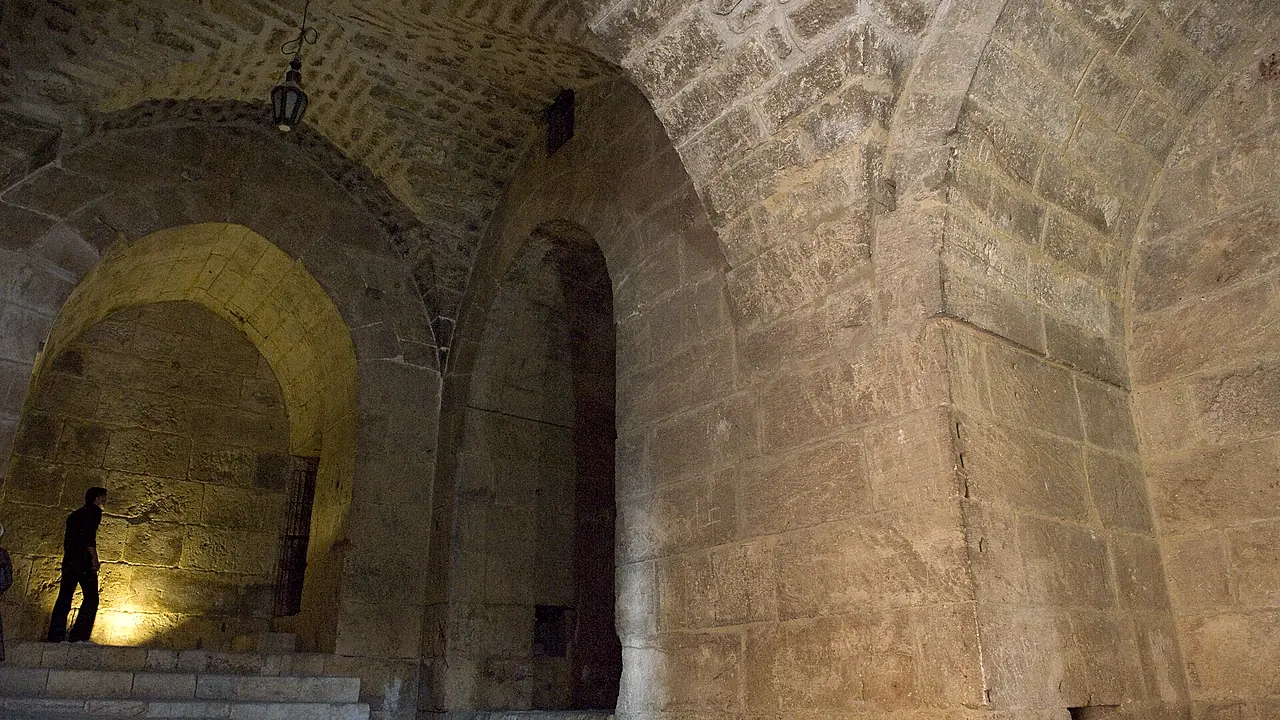
The Weapons' Hall
The vaulted armoury, where the garrison's weapons were stored and kept ready.
Byzantine
The Byzantine Hall
The clearest surviving pre-Islamic building on the mound apart from the temple — standing here centuries before the fortress was built around it.
Seleucid well
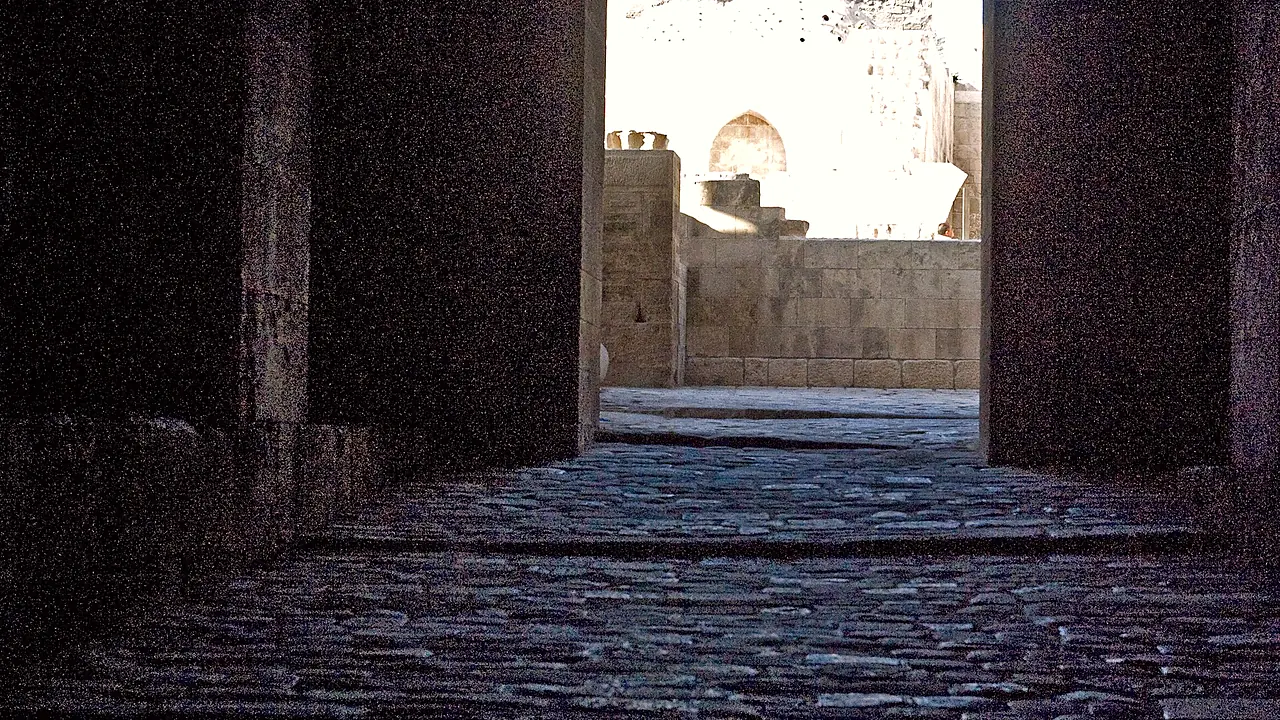
The Satura and the Hellenistic Well
Water shafts driven 125 metres down through bedrock into storage cisterns — the reason the Citadel could outlast a siege.
Ayyubid / Mamluk
The Underground Passages
Tunnels linking the interior to the advance towers — and, it is said, running under the moat into the city itself.
1834–40s
The Ottoman Barracks
Built on the northern crown out of stone salvaged from what the 1822 earthquake had wrecked.
c. 1850–51
The Ottoman Windmill
Ground the garrison's flour on the northern edge of the summit.
Modern
The Amphitheatre
Not ancient. Built in 1980, seating around three thousand, on ground that has never been excavated.