- Period
- Byzantine, 395–636
- City then
- Beroia
- Role
- Civic / palatial hall
- State
- Standing
Film to be added
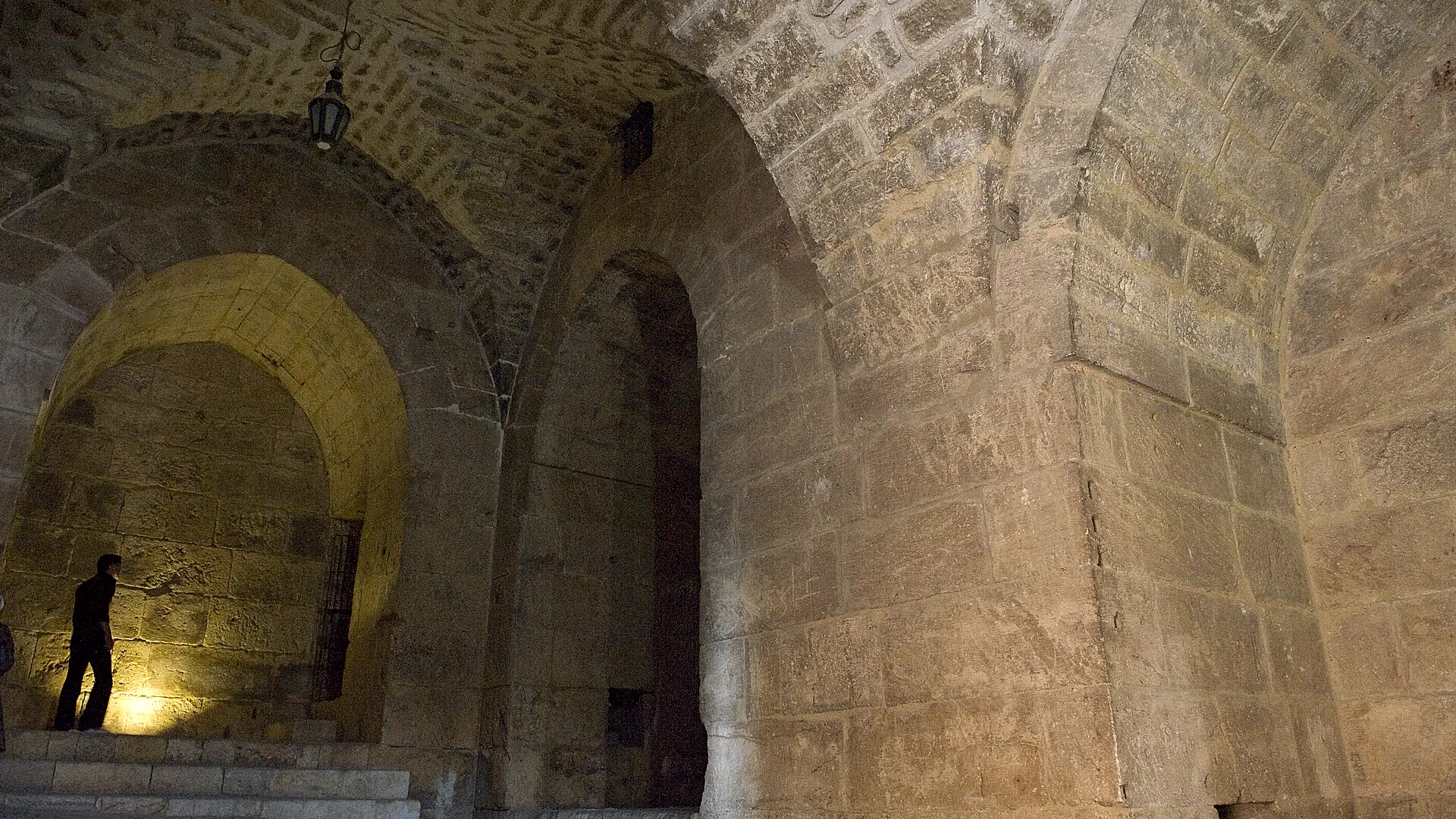
It is easy to read this hill as an Ayyubid fortress with some older things buried under it. This hall is the correction. It was standing, and in use, some six hundred years before al-Zahir Ghazi laid a stone.
Under Byzantine rule, between 395 and the Muslim conquest of 636, the acropolis of Beroia was a working civic and military place, and this is what survives of it above ground. When the city walls failed during the Sasanian attacks of the seventh century, the population of Aleppo came up here — to buildings like this one — because the hill was still what it had always been: the place you go when the city cannot hold.
Two churches also stood on the mound in this period. Both later became mosques, and both are still here.