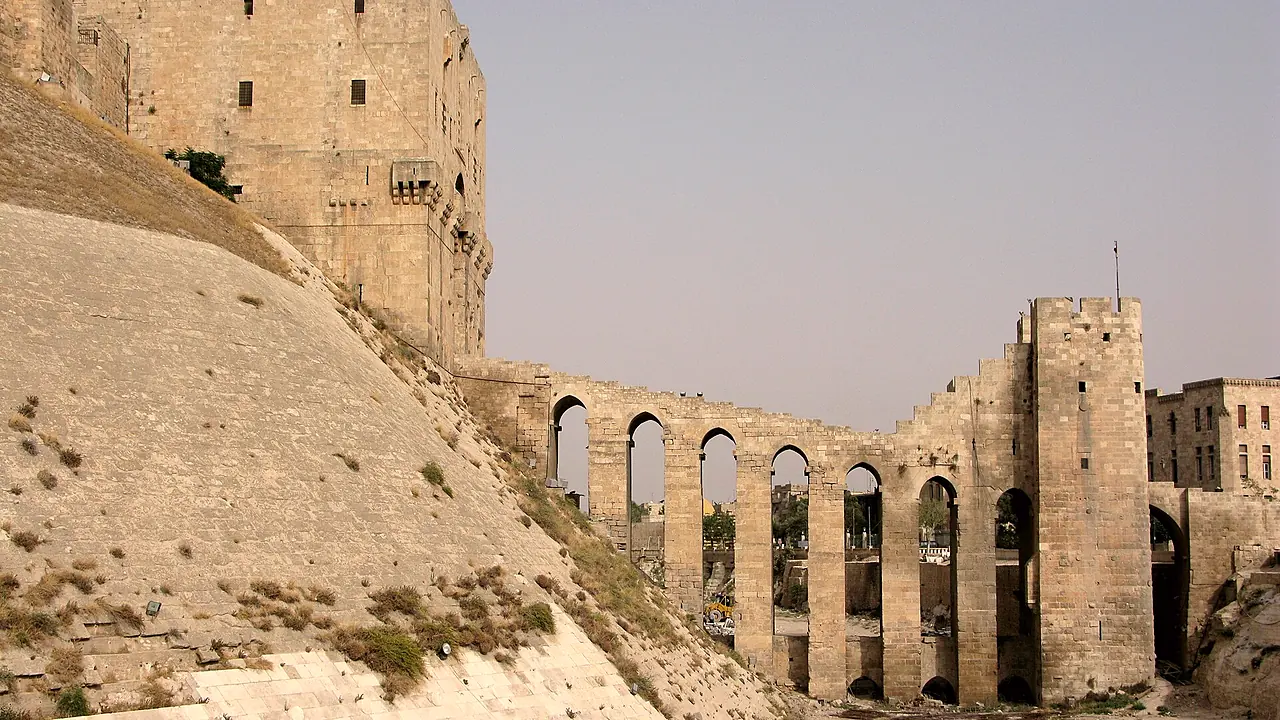
- Base
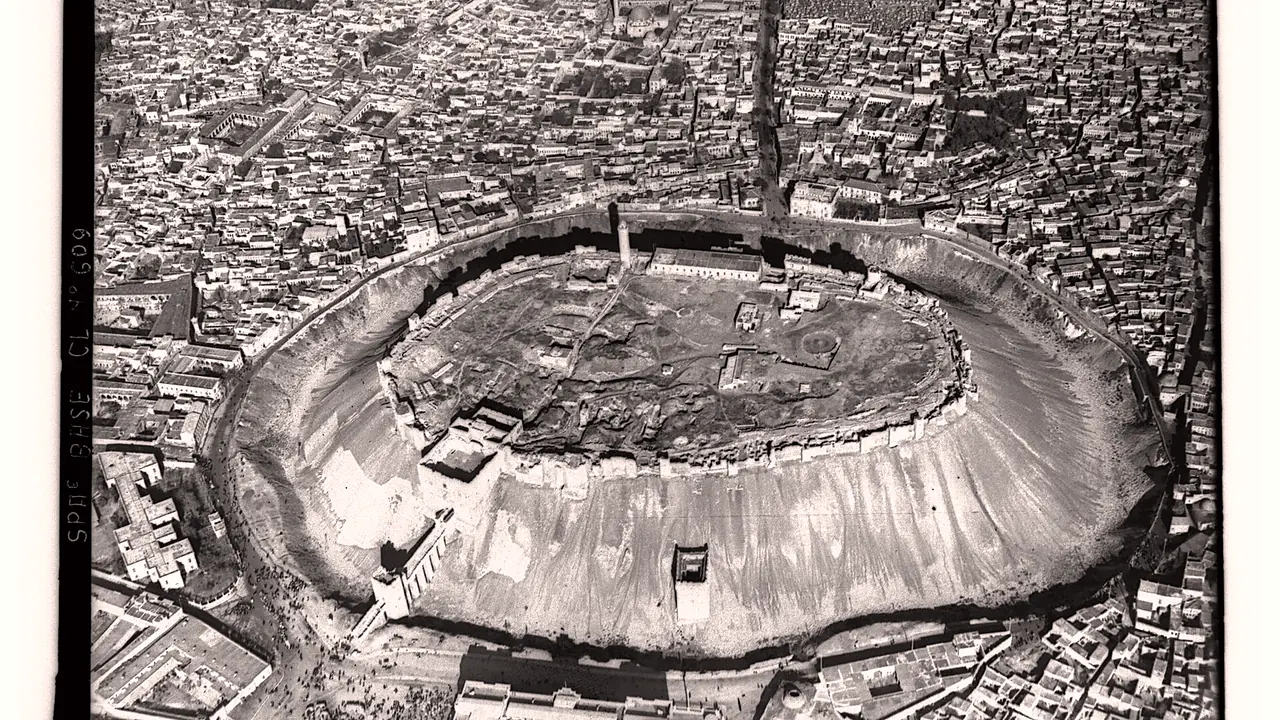
- 450 × 325 m
- Moat
- 22 m deep
- Minaret
- 21 m
- Oldest layer
- c. 2400 BC
- World Heritage
- 1986
Start here
22 monuments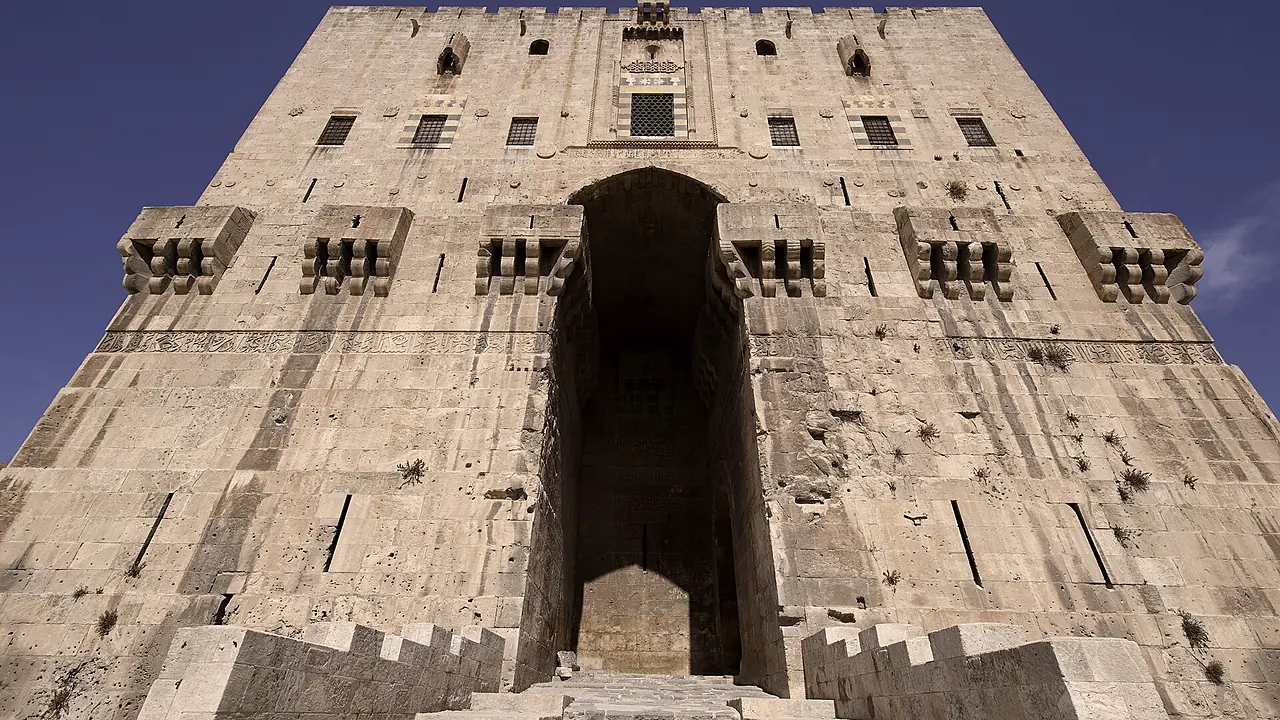
Ayyubid
The Bashoura — the Fortified Entrance
A vaulted ramp that turns five or six times under openings built for pouring fire. The most sophisticated fortress entrance of the medieval world.
Mamluk
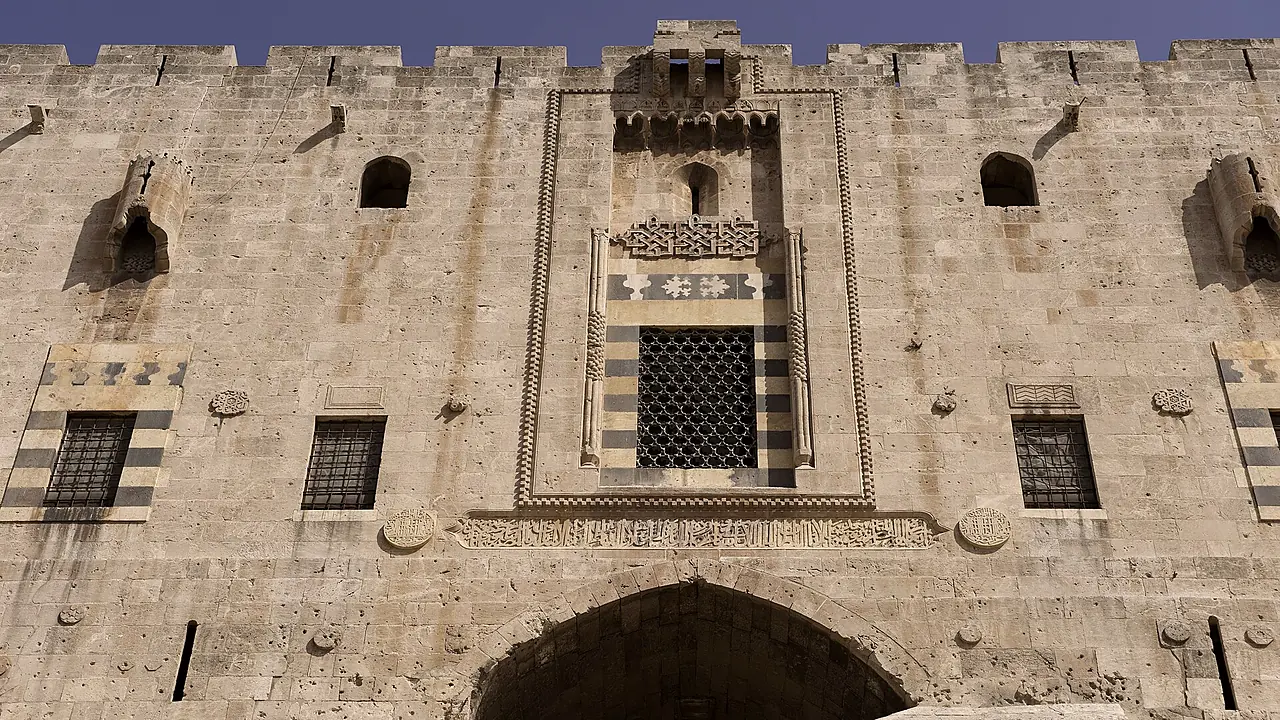
The Throne Hall
Mamluk sultans received guests in a hall built directly on top of the gate — 26.5 by 23.5 metres, ten windows, seven steps down, an Ayyubid fountain at its centre.
Ayyubid, with later Mamluk rebuilding
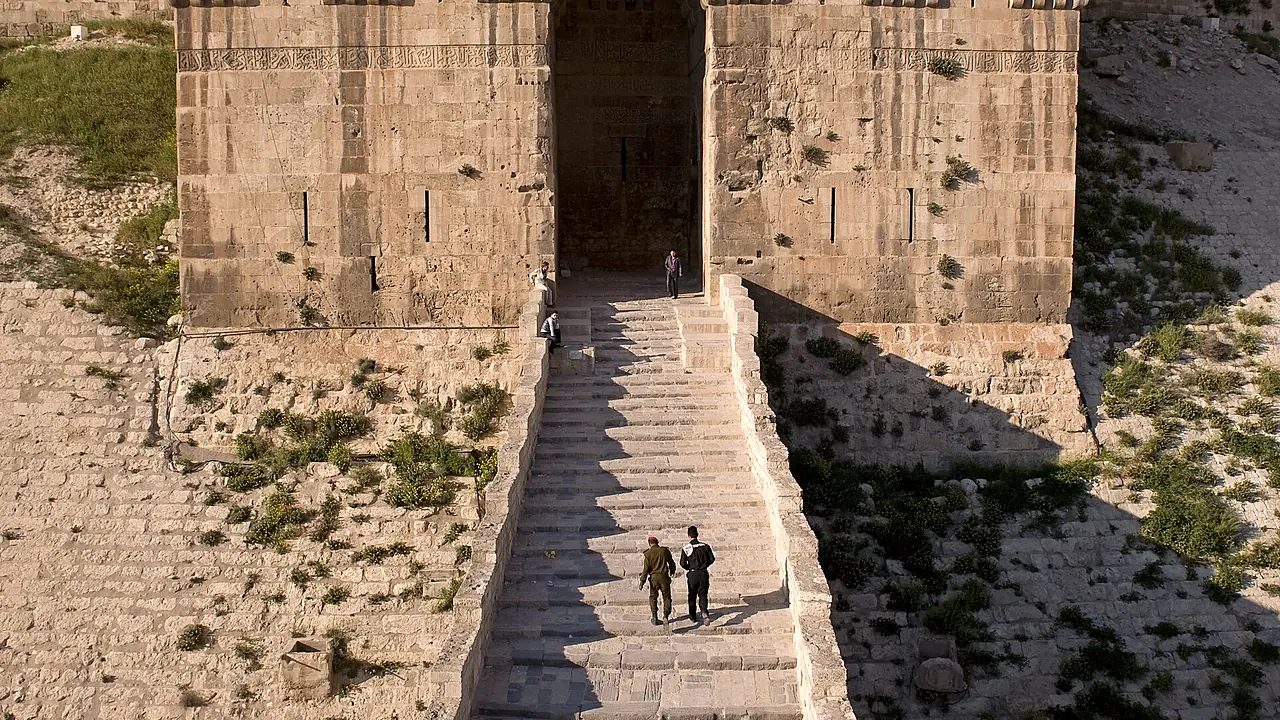
The Bridge
A viaduct on arches crossing the moat and climbing to the gate — the most dramatic approach of any fortress in the region.
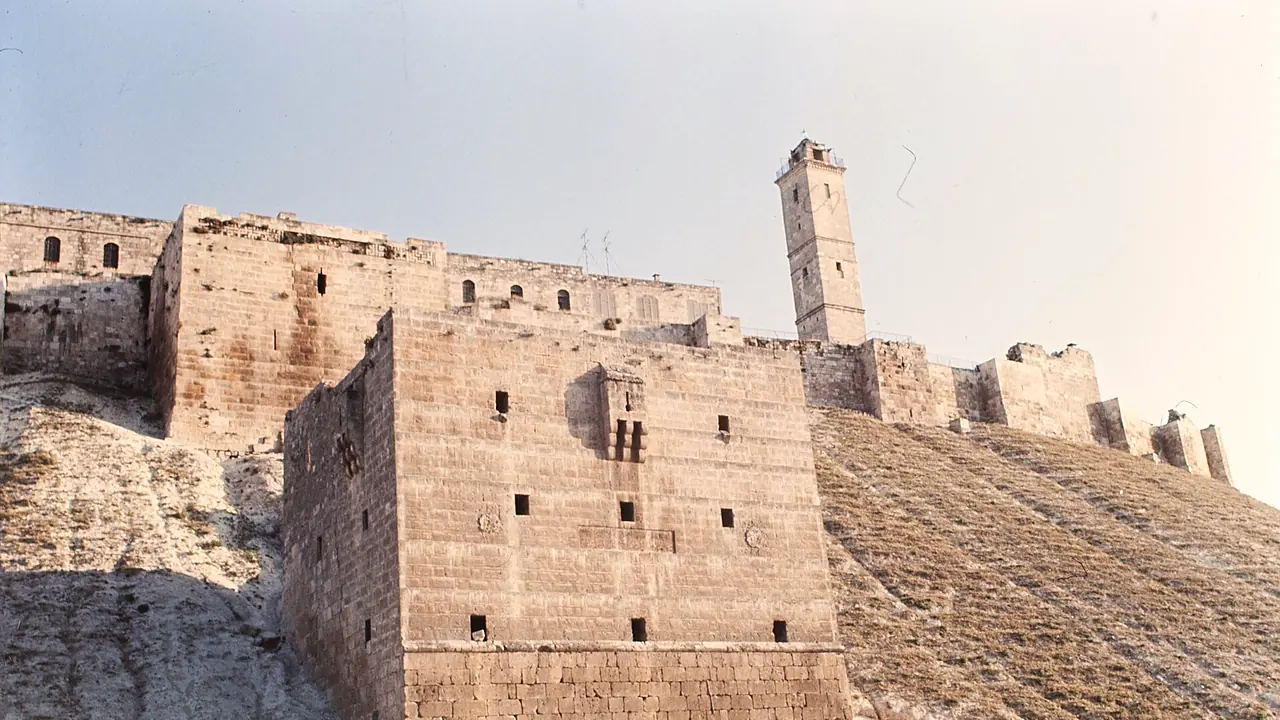
Byzantine church → Ayyubid mosque
The Great Mosque of the Citadel
The mosque of the court and the garrison. Its minaret is the mound's landmark, visible from across the Old City.
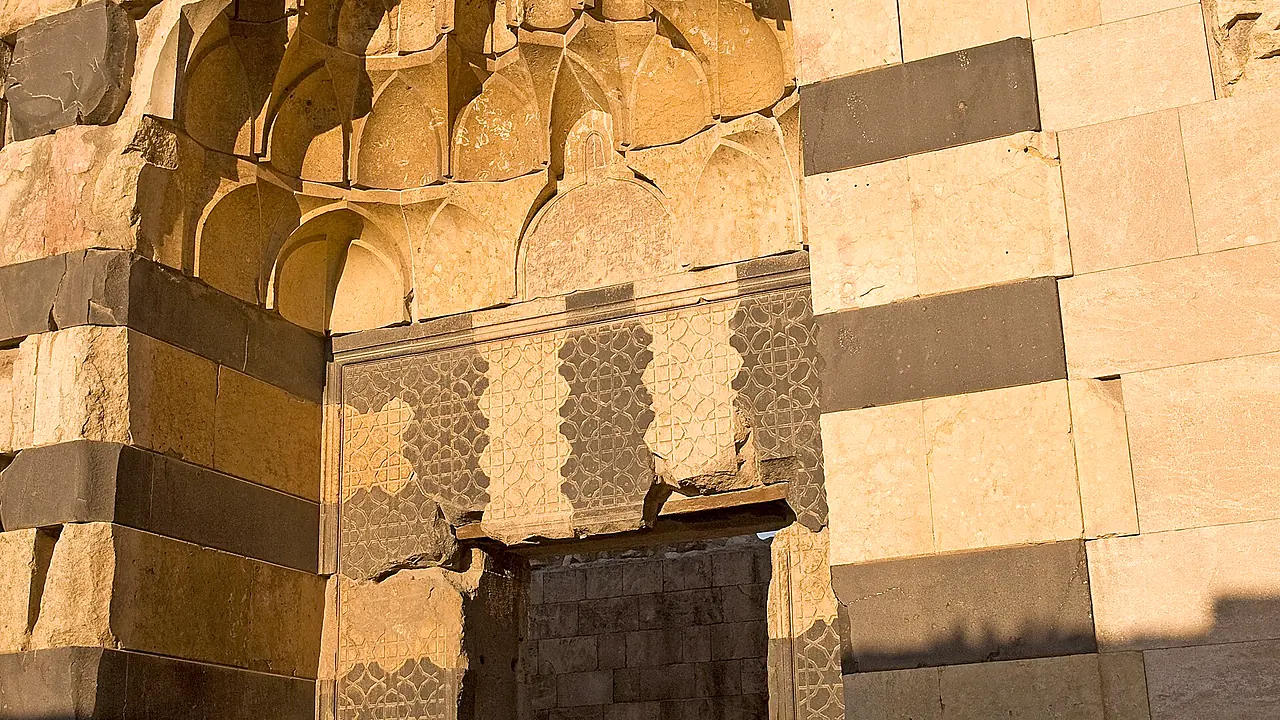
al-Zahir Ghazi
The Ayyubid Palace
Dar al-'Izz, the Palace of Glory: a four-iwan courtyard with a muqarnas portal, burned once and destroyed once.
The layer stack
Fifteen cultures on one hill
From the temple of the storm god in 2400 BC to the reopening in 2025 — and twelve of them left something you can still stand next to.
Read the culturesThe six stations
Six screens inside the Citadel, each with its own film and its own short address that brings you to the full article.
aleppo-citadel.sy/bashoura
The Bashoura — the Fortified Entrance
aleppo-citadel.sy/throne-hall
The Throne Hall
aleppo-citadel.sy/great-mosque
The Great Mosque of the Citadel
aleppo-citadel.sy/al-khidr
Maqam al-Khidr
aleppo-citadel.sy/royal-bath
The Royal Bath
aleppo-citadel.sy/byzantine-hall
The Byzantine Hall
Plan your visit
The Citadel is not walked into, it is climbed. These pages tell you what that means before you start.