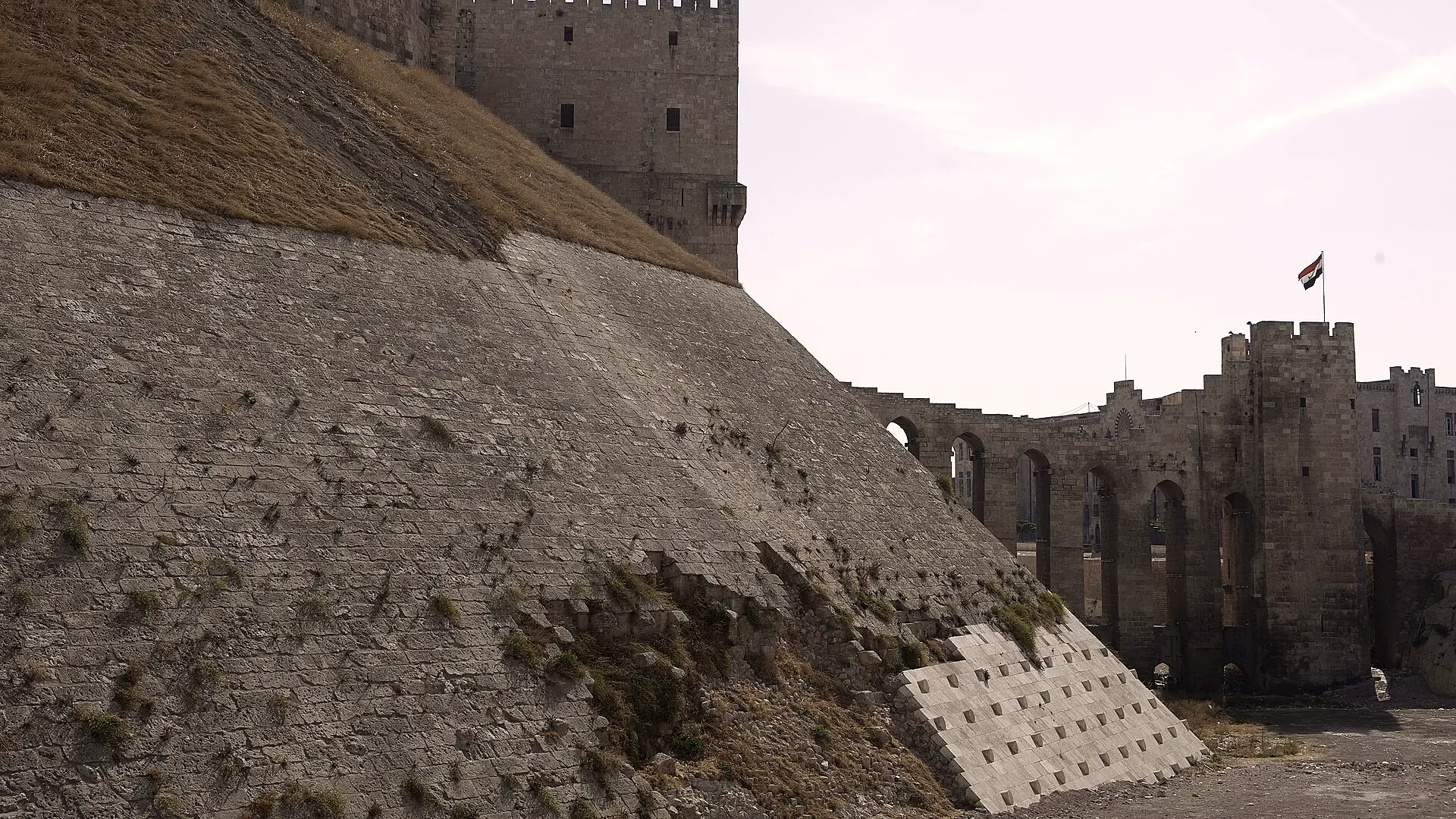
- Period
- Ayyubid, c. 1200
- Material
- Dressed limestone
- Purpose
- Anti-climb, anti-mining
- State
- Partly preserved
Below the walls, the mound wears a skin. Great blocks of dressed limestone were laid over the natural slope of the hill and smoothed, turning an earth-and-rubble incline into a single unbroken sheet of stone running from the moat up to the ramparts.
This is the glacis, and it solved two problems at once. A man cannot climb it — there is no purchase, and under fire from above the attempt is suicide. And a sapper cannot dig into it, which mattered more: the standard way to take a fortress in the thirteenth century was to tunnel under a tower and collapse it. The glacis puts a stone lid on the entire hill.
It was also, plainly, meant to be looked at. Contemporary accounts describe it gleaming. A traveller approaching Aleppo saw a mountain sheathed in white stone with a fortress on top, and understood the arrangement immediately.