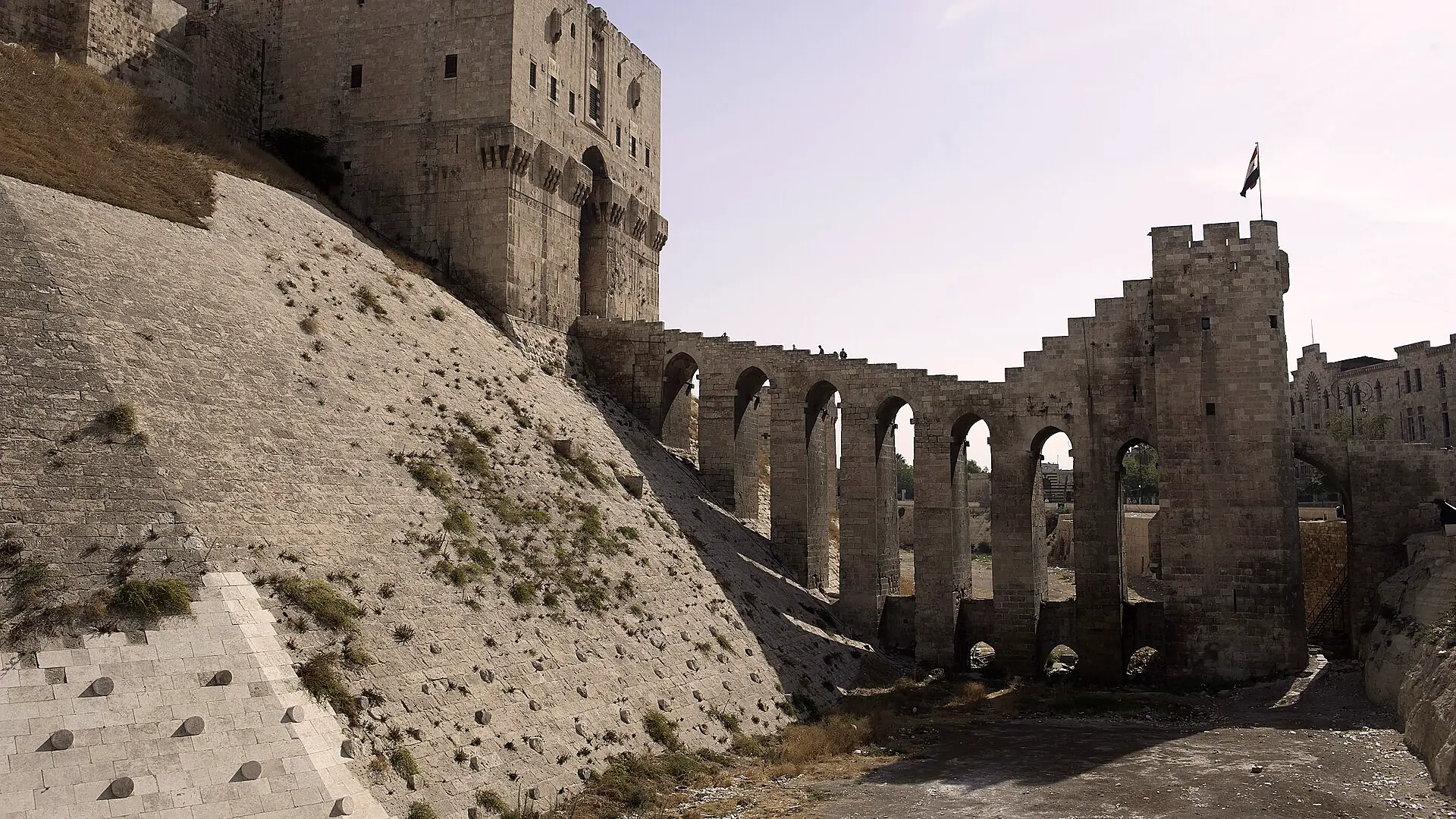
- Depth
- 22 m
- Width
- 30 m
- Period
- Ayyubid, 12th–13th c.
- State
- Standing
The moat is the first thing the Citadel does to you. Before any wall, any gate, any tower, there is simply a hole in the ground twenty-two metres deep and thirty metres wide, running the entire way around the mound. An attacking army arriving at Aleppo did not begin by fighting. It began by looking down.
The ditch is Ayyubid in its present form, deepened under al-Malik al-Zahir Ghazi at the turn of the thirteenth century, and it was fed from the city's water channels so that it could be flooded. In 1415, after Timur had passed through and left the fortress wrecked, the Mamluk governor Sayf al-Din Jakam had it cleared out again.
The chroniclers record how he did it, and the detail is worth keeping. Jakam conscripted the city — not the poor alone, but the notables too, the merchants and the office-holders, made to dig side by side with labourers. Aleppo dug its own moat, together, under compulsion. It is a very old story about what a city will do when it is frightened enough.